
Build Business Credit: A Practical Guide
Finance, Business Credit, Agencies
How to Build Business Credit From Scratch: A Practical Guide for Companies and Agencies
Establishing strong business credit is no longer optional for growing companies and agencies. It is a strategic asset that influences your access to capital, vendor terms, insurance rates, and even the clients willing to work with you. This guide walks through a clear, professional roadmap to build business credit from the ground up, even if you are starting from zero today.
Why Business Credit Matters for Companies and Agencies
Business credit is the track record your company develops with lenders, suppliers, and other financial partners. For agencies and growing businesses, it directly affects your ability to scale operations, hire talent ahead of revenue, and weather cash-flow fluctuations without relying on personal funds. Strong business credit separates your company’s risk profile from your personal finances and sends a clear signal of professionalism to the market.
When you have established business credit, you can often secure:
Higher credit limits and better interest rates on business loans and lines of credit
More favorable payment terms with vendors and media partners (for agencies in particular)
Increased negotiating power with landlords, leasing companies, and equipment providers
Reduced need for personal guarantees and personal credit checks on every transaction
📌 Key Takeaway: Treat business credit as an asset you intentionally build, not a byproduct of doing business. The earlier you start, the more options you unlock when your company or agency is ready to scale.
Step 1: Separate Your Business Identity From Day One
Building business credit from scratch begins with a clear legal and financial separation between you and your company. Lenders and credit bureaus need to see your business as a distinct entity before they can evaluate it and assign a credit profile. This is especially important for agencies, where founders often start as freelancers using personal accounts and gradually grow into a formal business.
Choose and Formalize a Business Structure
While sole proprietorships can technically operate as businesses, they do not provide the clean separation that credit bureaus and lenders prefer. Consider forming a limited liability company (LLC) or corporation. These structures:
Create a distinct legal entity separate from you as an individual
Allow business credit bureaus to track your company’s activity independently
Often reduce the need for personal guarantees as your business matures
Obtain an Employer Identification Number (EIN)
Your EIN functions like a Social Security number for your business. It is required for filing business taxes, opening business bank accounts, and applying for most types of business credit. Applying for an EIN through the IRS is straightforward and free. Once issued, use your EIN consistently for all business-related financial applications and forms.
Open a Dedicated Business Bank Account
A separate business checking account is essential for both bookkeeping and credit building. Many lenders will review your business banking history to assess cash flow stability. For agencies that manage client retainers, ad spend, or project deposits, a dedicated account also demonstrates operational discipline and transparency.
💡 Pro Tip: Choose a bank that offers a clear path from basic business checking to lines of credit and card products. A strong relationship with a single institution can make future approvals faster and smoother.
Step 2: Make Your Business “Credit-Ready” and Visible
After establishing a legal and banking foundation, the next step is to ensure your business looks legitimate and stable from a lender’s perspective. Credit issuers use a mix of public records, directories, and industry data to validate your company. Incomplete or inconsistent information can lead to declined applications, even when your finances are sound.
Standardize Your Business Information Everywhere
Ensure your legal business name, address, phone number, website, and email are consistent across all platforms, including your website, bank, tax filings, and directory listings. Agencies that operate remotely or use coworking spaces should still maintain a stable mailing address and dedicated business phone line or VoIP number. Consistency reduces red flags during underwriting and helps credit bureaus correctly match data to your profile.
Get Listed With Business Credit Bureaus
Major business credit bureaus in the United States include Dun & Bradstreet, Experian Business, and Equifax Business. Each one compiles data from vendors, banks, public records, and other sources. To build business credit from scratch, you should:
Request a D-U-N-S Number from Dun & Bradstreet if your company does not already have one
Confirm your business information with Experian and Equifax through their business portals
This step ensures that when vendors or lenders report your payment history, it is correctly attached to your company profile, not lost or misattributed.
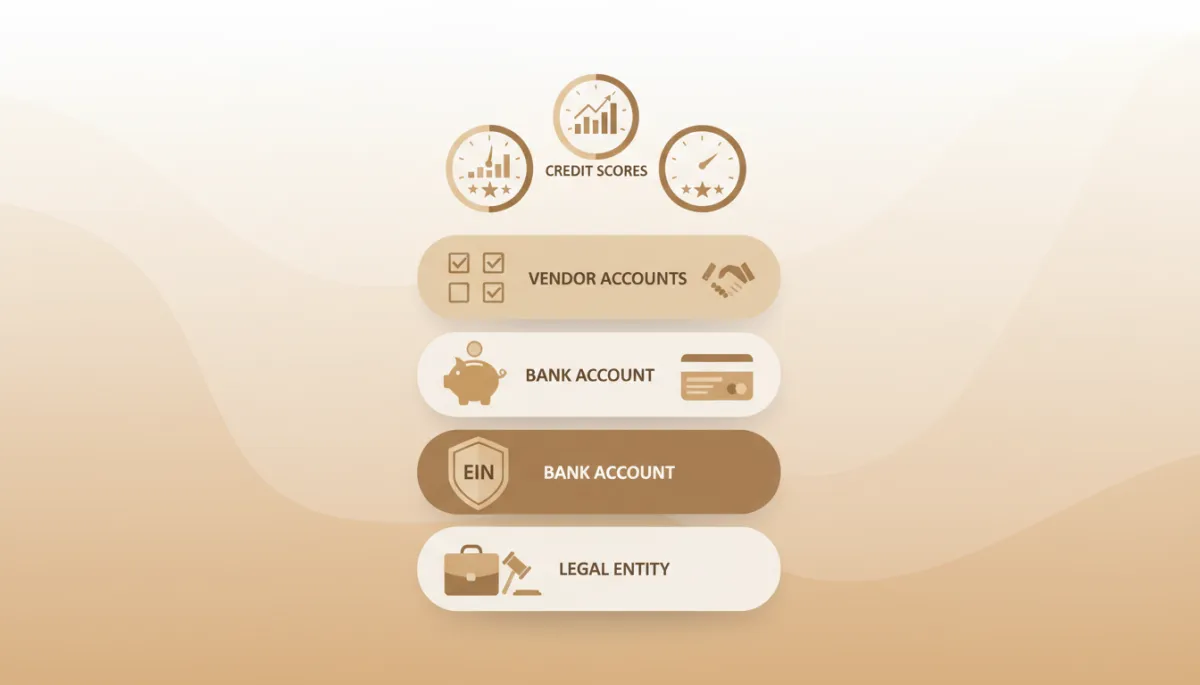
Strong business credit is built step by step, starting with a clear, verified identity.
Step 3: Start With Vendor Credit That Reports to Bureaus
When you are starting from zero, traditional bank loans or unsecured lines of credit may be out of reach. Instead, focus on trade credit from suppliers and service providers that report your payment activity to business credit bureaus. For agencies, this might include software vendors, print partners, or media platforms that offer invoicing terms rather than requiring upfront payment.
Identify Net-30 and Net-60 Vendors That Report
Net-30 or net-60 accounts give you a set number of days to pay after receiving goods or services. Many vendors extend these terms even to newer businesses if orders are modest and your company appears legitimate. The key is to work with vendors that share data with credit bureaus. Without reporting, your responsible payments will not help build your business credit profile.
Ask potential vendors directly whether they report to Dun & Bradstreet, Experian, or Equifax
Prioritize suppliers that can provide ongoing, recurring services your business genuinely needs
Use Vendor Credit Strategically, Not Aggressively
The goal at this stage is not to maximize how much you can borrow. Instead, you want to show a consistent pattern of purchases and on-time payments. For example, an agency might place small monthly orders for branded materials, software licenses, or office supplies using vendor credit rather than paying in cash upfront. Paying these invoices early or on time every month helps establish a positive payment history, which is a core component of most business credit scores.
📌 Key Takeaway: Even modest vendor accounts can have an outsized impact on your business credit profile when they report consistently and you pay reliably.
Step 4: Open and Manage a Business Credit Card Responsibly
Once your company has an EIN, a business bank account, and some operational history, the next logical step is a business credit card. Many issuers will consider new businesses, including agencies, if the owner has good personal credit. Initially, you may still need to provide a personal guarantee, but the activity will begin to build your business credit footprint as well.
Choose a Card That Reports to Business Bureaus
Not all business credit cards report the same way. Some report only to consumer credit bureaus, others to both consumer and business bureaus, and some primarily to business bureaus. If your goal is to build business credit from scratch, prioritize cards that clearly report to Dun & Bradstreet, Experian Business, or Equifax Business. Review issuer disclosures or contact customer support to confirm reporting practices before applying.
Use the Card for Predictable, Budgeted Expenses
To avoid overextending your business, start by charging recurring, budgeted expenses such as software subscriptions, utilities, or routine travel. For agencies, this might include project management tools, design platforms, or communication software. Pay the statement balance in full and on time each month. This behavior demonstrates responsible credit use, supports a low utilization ratio, and strengthens your company’s credit profile over time.
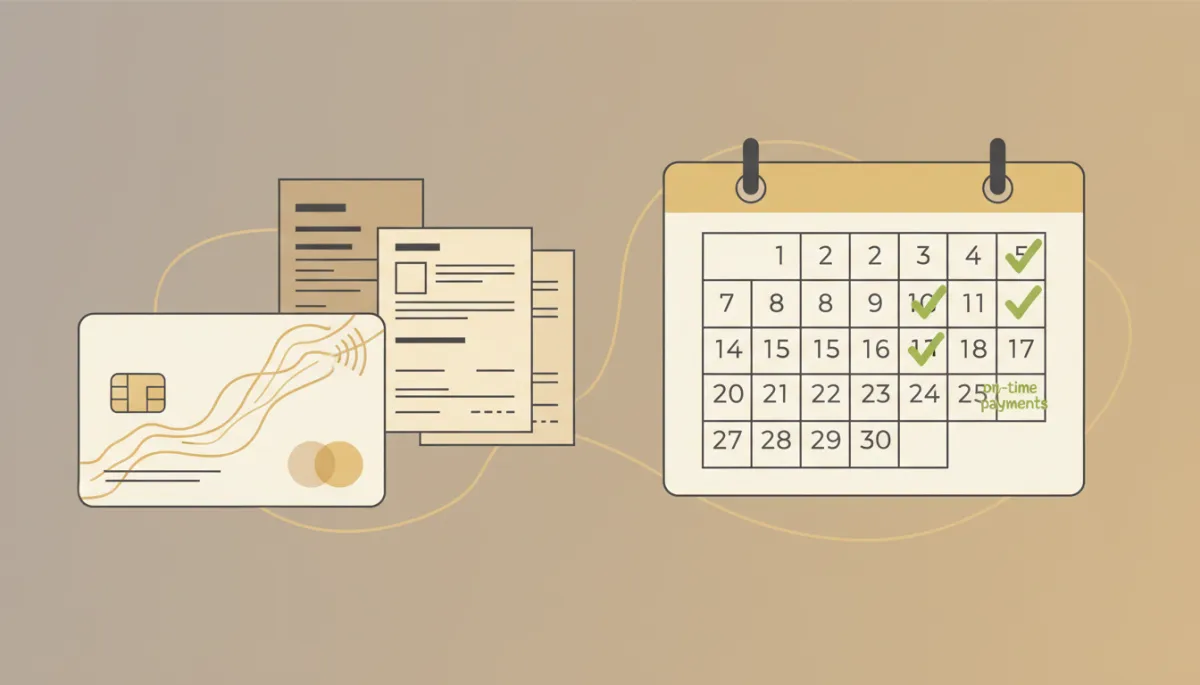
Coordinating card and vendor payments builds a consistent record of reliability across accounts.
Step 5: Monitor Your Business Credit and Correct Errors
As your business credit activity grows, it becomes essential to monitor your reports regularly. Mistakes, outdated information, or missing trade lines can undermine your efforts. Agencies that work with multiple vendors and financial partners are particularly vulnerable to reporting gaps and inconsistencies, simply because more data is in motion.
Review Reports From Major Bureaus Periodically
Each bureau maintains its own scoring model and data sources, so your business credit profile may look slightly different across them. Set a schedule—quarterly or biannually—to review your reports. Confirm that:
Your business name, address, and industry classification are accurate
Active vendor and credit accounts appear and reflect your payment history correctly
There are no unfamiliar accounts, judgments, or derogatory marks
Dispute Inaccuracies Promptly and Professionally
If you find errors, follow each bureau’s dispute process. Provide documentation such as invoices, payment confirmations, or correspondence with vendors to support your case. Approach disputes with the same professionalism you would use with a key client: clear communication, organized evidence, and realistic expectations regarding timelines. Correcting inaccuracies not only protects your credit standing but also signals to future lenders that your organization manages details carefully.
💡 Pro Tip: Assign a finance lead or operations manager to own the process of monitoring business credit and maintaining documentation. This ensures continuity as your company or agency grows.
Step 6: Strengthen Credit With Responsible Growth and Diversification
Once you have established a foundation—legal structure, EIN, bank account, vendor accounts, and a business credit card—you can gradually expand your credit relationships. The objective is to create a diversified, well-managed credit profile that reflects the scale and sophistication of your business or agency.
Consider Lines of Credit and Equipment Financing
As your revenue stabilizes and your business credit history matures, approach your bank or alternative lenders for a small line of credit or equipment financing. For agencies, this might fund technology upgrades, studio equipment, or hiring ahead of large client engagements. Start with manageable limits and ensure that repayment terms align with your cash-flow cycles. Timely payments on these larger facilities further strengthen your credit profile and can reduce reliance on personal guarantees over time.
Maintain Conservative Utilization and Ample Reserves
Credit utilization—the percentage of available credit you are actively using—is a key factor in many business credit scoring models. Aim to keep revolving utilization (such as on cards and lines of credit) at a conservative level, often below 30 percent of your total available limit. Maintaining cash reserves and forecasting your cash flow help you avoid emergency borrowing that could spike utilization and signal financial strain to lenders.
Practical Tips for Agencies and Service-Based Businesses
Agencies and service-based companies have unique cash-flow patterns. Projects may require upfront investment in labor or media before client payments are received. This makes disciplined credit management even more important. A thoughtful approach to business credit can transform cash-flow volatility into a manageable, predictable process.
Align credit use with receivables: Use short-term credit only when there is a clear, contracted client payment on the horizon to cover it.
Negotiate terms on both sides: Seek longer payment terms with vendors while encouraging retainers or milestone billing with clients to reduce timing gaps.
Centralize purchasing: Route major recurring expenses through a small set of vendor accounts and cards to concentrate your positive payment history.
Common Mistakes to Avoid When Building Business Credit From Scratch
While the steps to build business credit are straightforward, several common missteps can slow your progress or even damage your profile. Being aware of these risks helps you set internal policies and controls that protect your company or agency as it grows.
Mixing personal and business expenses: Using personal cards or accounts for business spending blurs the line between your finances and makes it harder to build a clean business history.
Overextending early: Taking on large credit facilities before your revenue and cash flow can comfortably support them increases the risk of late payments and credit damage.
Ignoring small invoices: Even minor vendor invoices that go unpaid or are consistently late can show up as derogatory marks, especially if the vendor reports to bureaus.
Applying for too much credit at once: Multiple hard inquiries in a short period can signal desperation and may result in lower approval odds or less favorable terms.
Turning Business Credit Into a Strategic Advantage
When managed intentionally, business credit becomes more than a way to borrow—it becomes a strategic tool. For agencies, it can support larger client engagements, fund campaign expenses before reimbursement, and provide the flexibility to invest in talent and technology ahead of demand. For product-based or hybrid businesses, strong credit can unlock better purchasing terms, support inventory expansion, and reduce overall financing costs.
Over time, a well-established credit profile can also enhance your company’s reputation. Landlords, insurers, and even potential partners may review your business credit as part of their due diligence. A history of responsible borrowing and timely payments reinforces the message that your organization is stable, disciplined, and prepared for long-term collaboration.
Final Thoughts: Start Small, Be Consistent, and Think Long Term
Building business credit from scratch is not a one-time project; it is an ongoing discipline. The most successful companies and agencies approach it in phases. They first establish a clear business identity and basic accounts, then layer on vendor credit and cards, and finally expand into more sophisticated facilities as their operations grow. At each stage, they prioritize reliability over speed and sustainability over short-term gains.
Whether you are launching a new agency, professional services firm, or growing business, the steps outlined in this guide provide a practical roadmap. Start by formalizing your entity and financial foundation. Make your business visible and verifiable. Build early trade lines with vendors that report. Add a business credit card and manage it conservatively. Monitor your credit, correct errors, and gradually expand your credit relationships in line with your strategy and cash flow.
With a deliberate approach, business credit becomes a powerful ally—supporting growth, smoothing cash flow, and signaling to clients, partners, and lenders that your organization is built on a solid financial foundation. Starting today, even with no history, you can take the first steps toward that advantage and position your company or agency for the opportunities ahead.